

Change Inbox
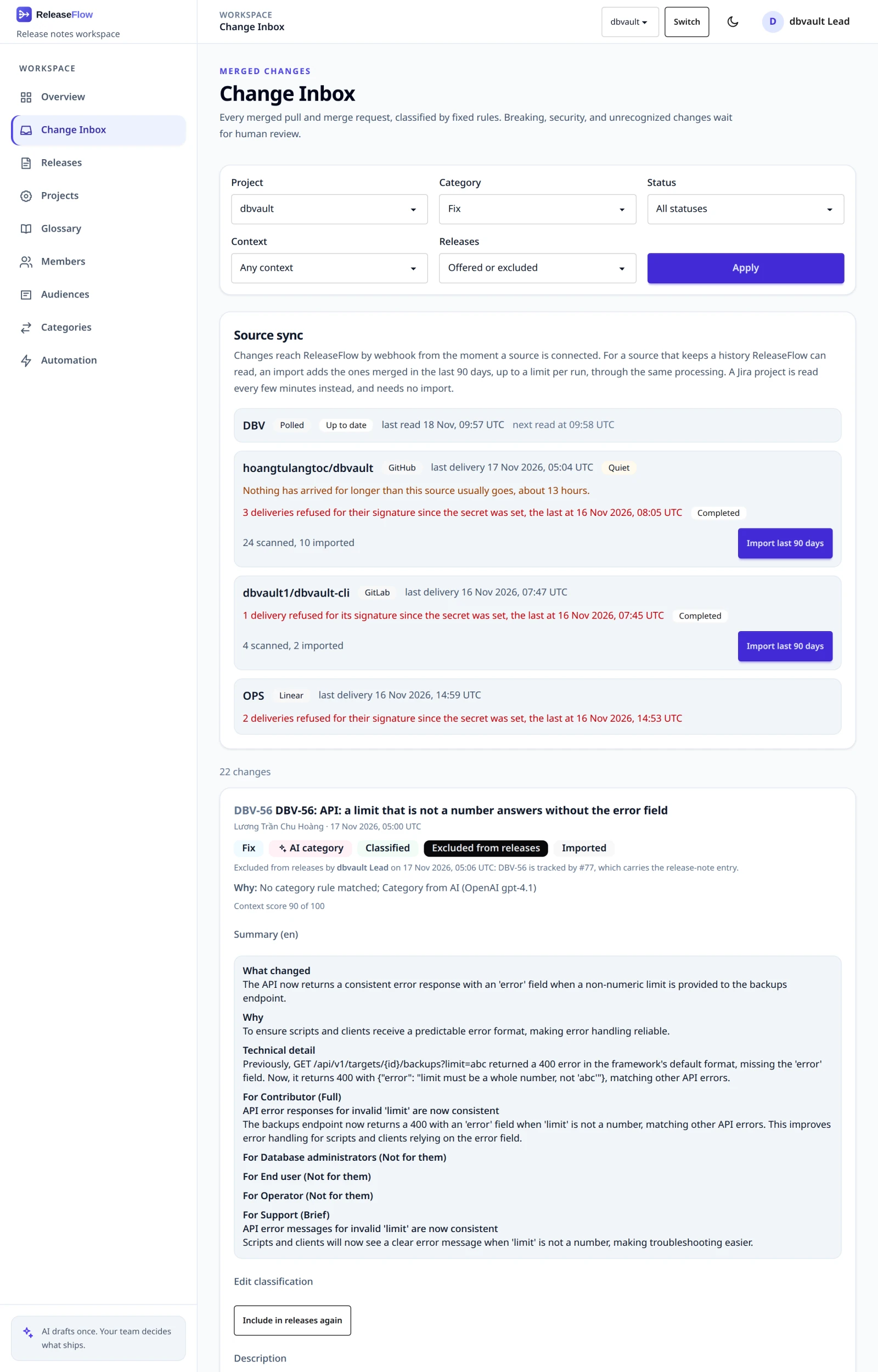
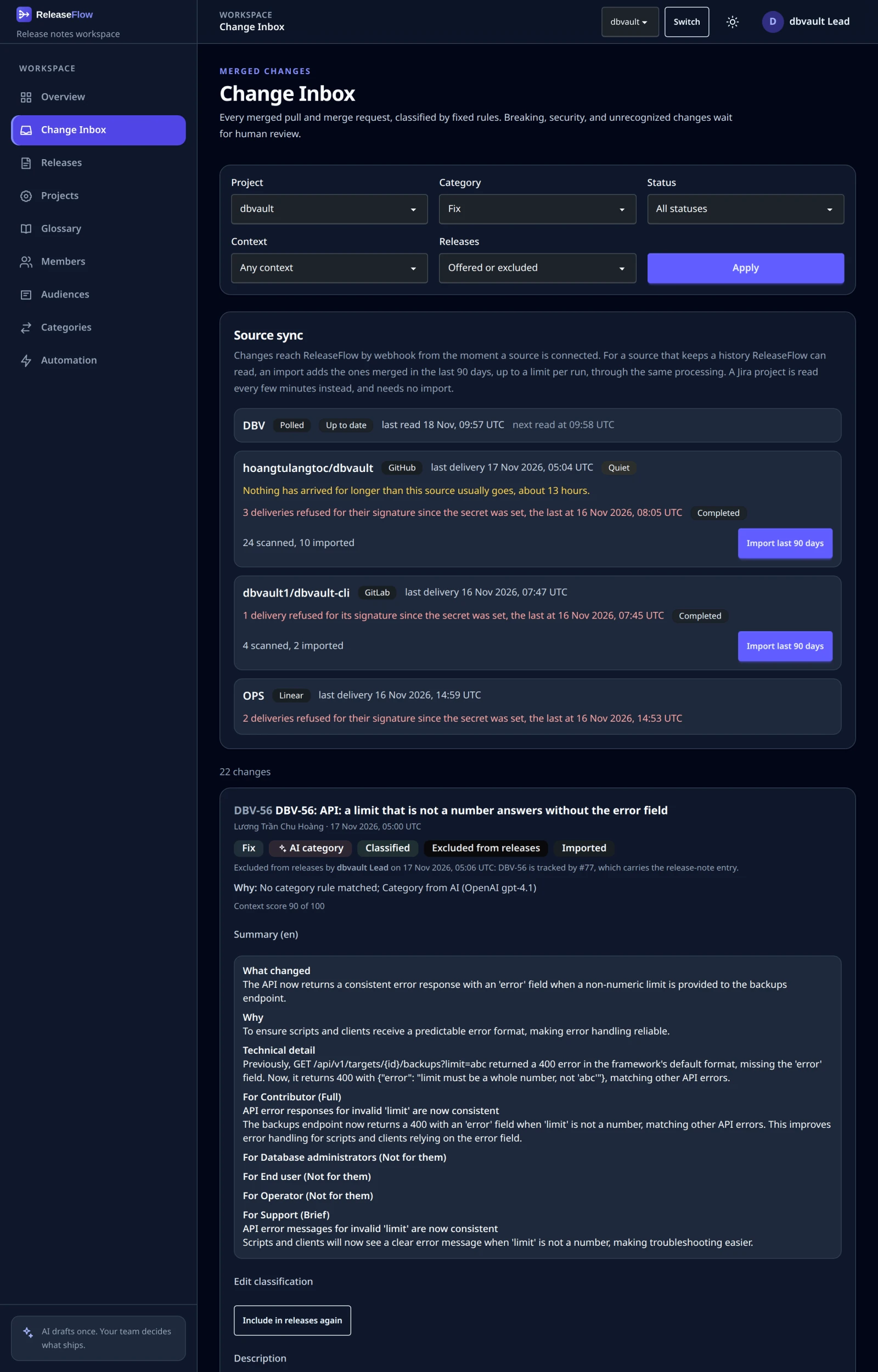
Review normalized changes from GitHub, GitLab, Linear, and Jira with their category and review evidence visible.
 Open source · self-hosted
Collect merged work, classify it with explainable rules, review what matters, and publish a note for every audience—from one application running on your own infrastructure.
Screenshots of ReleaseFlow at work on a sample project, in the language and theme you are reading in.
Review normalized changes from GitHub, GitLab, Linear, and Jira with their category and review evidence visible.
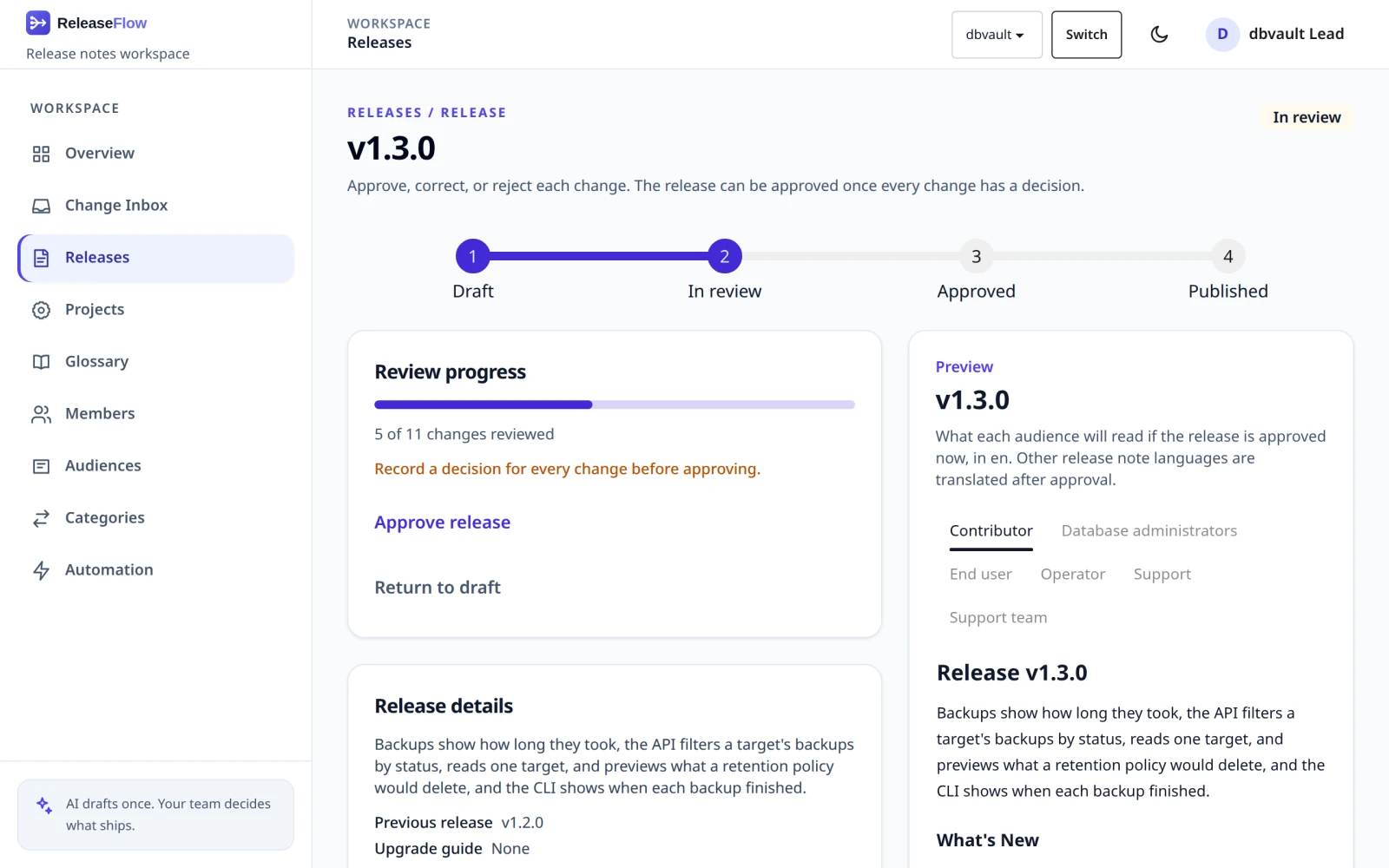
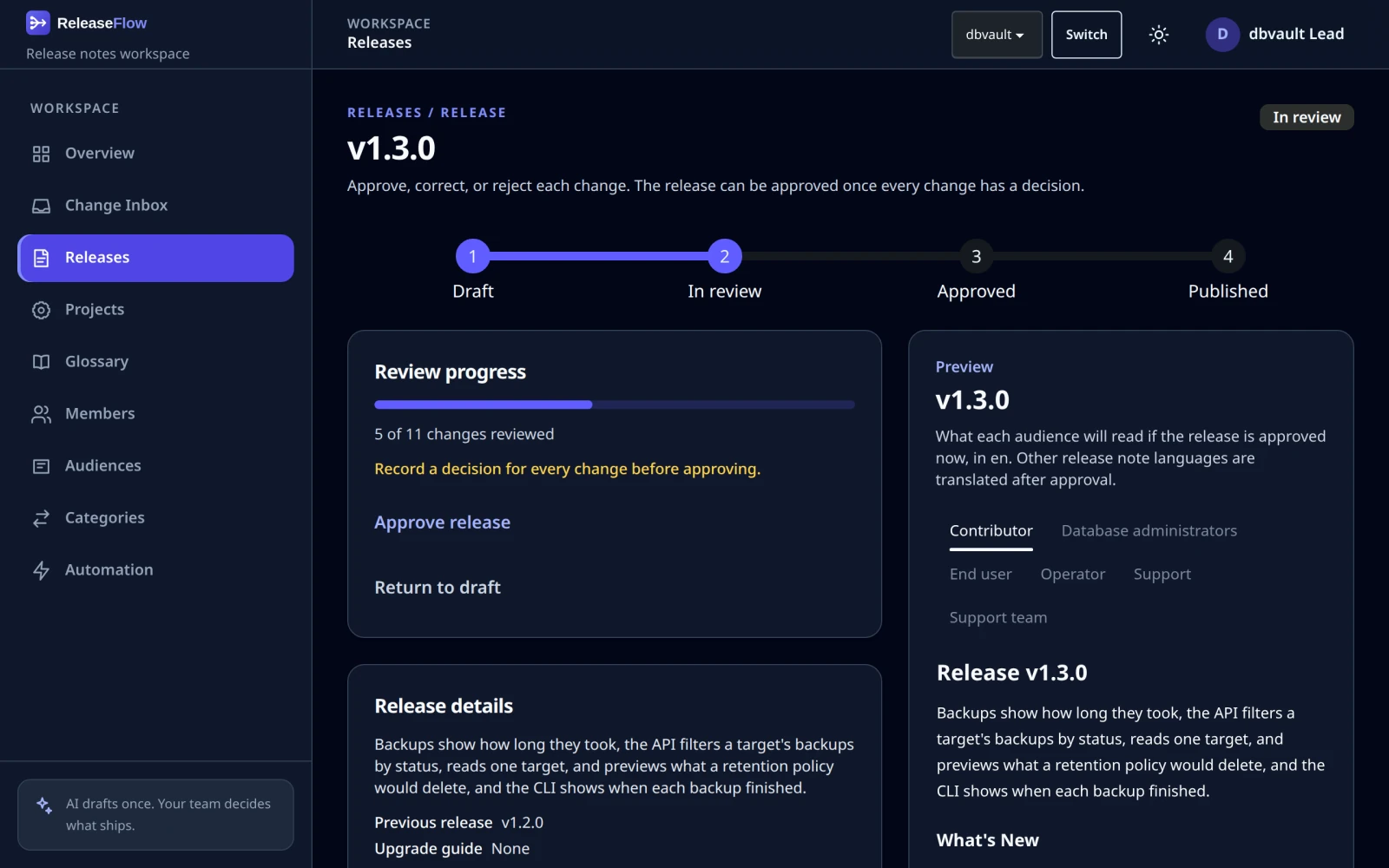
Decide on every change before approval, then publish frozen release notes written for each audience.
The released quickstart runs ReleaseFlow and PostgreSQL with Docker Compose. There is no repository to clone and nothing to compile.
mkdir releaseflow && cd releaseflow
base=https://github.com/hoangluongtran0309/ReleaseFlow/releases/latest/download
curl -fsSL --remote-name-all "$base/compose.yaml" "$base/quickstart.sh" "$base/SHA256SUMS"
sha256sum --check --ignore-missing SHA256SUMS
bash quickstart.shKeep the generated .env file. It contains the database password and the key that encrypts stored credentials.
ReleaseFlow is one Spring Boot application and one PostgreSQL database. You decide where they run and which external services they may reach.
Run the same Apache-2.0 code on your infrastructure. There is no hosted control plane or enterprise edition to depend on.
Webhook secrets and provider tokens are encrypted with the master key you supply and are never read back into a page or API response.
AI, translation, email, and delivery integrations are optional. They run only when you configure and use them.
ReleaseFlow keeps its code, decisions, release history, security process, and contribution path in the open.
Ask questions, report a problem, or make a contribution.
Follow the source-of-truth links instead of estimated counters.